Berlin’s Rebirth as a Creative Metropolis
From a Divided City to a Hub of Culture and Creativity
From Upheaval to a New Beginning
Few European metropolises have undergone such a radical transformation in recent times as Berlin. Once a focal point of the Cold War, the city has evolved into an international capital of art, and the creative industries. From a city divided by an insurmountable wall, Berlin emerged as an urban laboratory where new ways of living, cultural movements, and entrepreneurial ideas could take root.
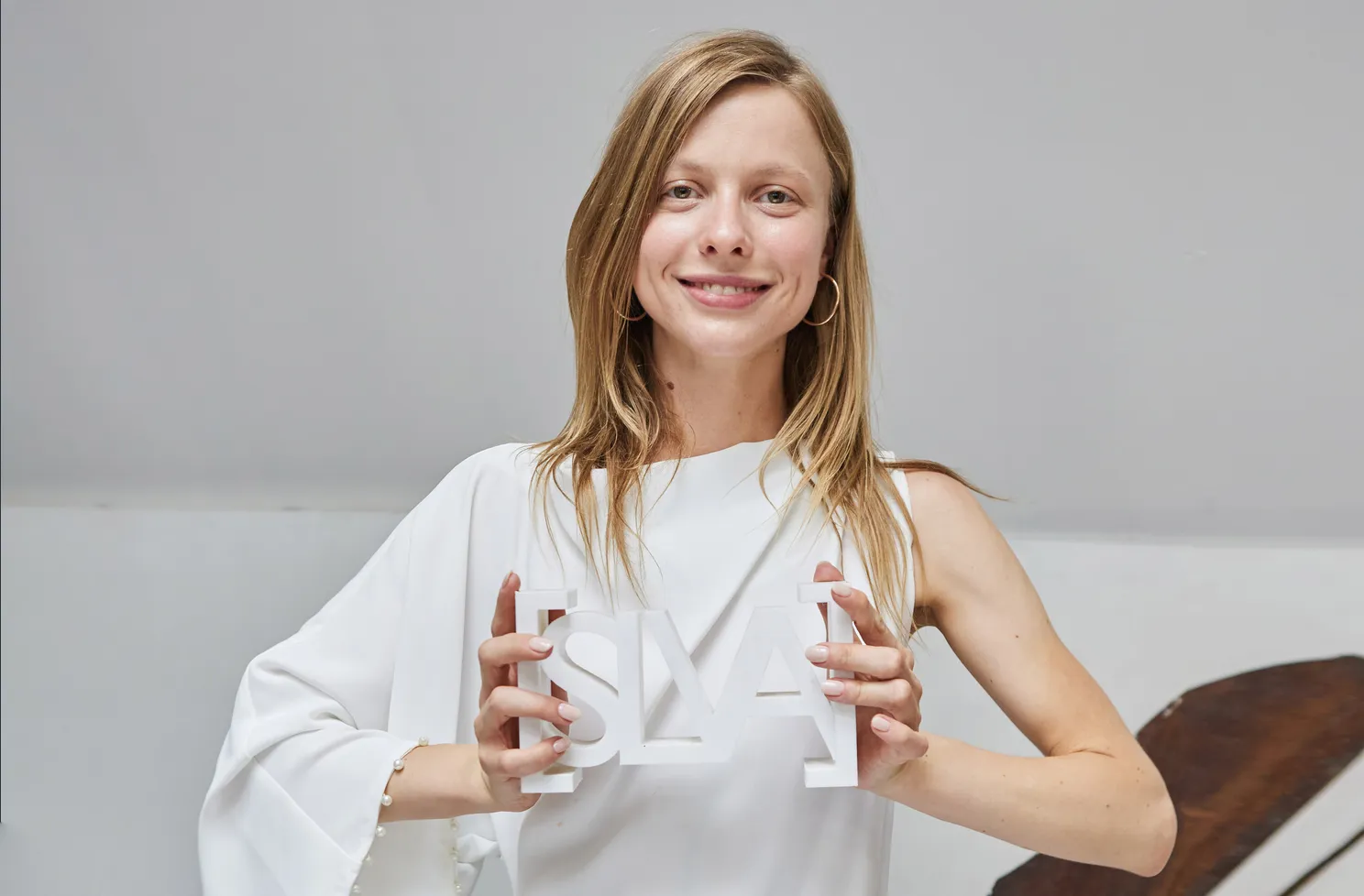
Natalia Golubenko, co-founder of the fashion label SELVA HUYGENS, takes you on a journey through this extraordinary era - from the early 1990s marked by seemingly unlimited opportunities to today’s international creative hub.
Together, you’ll explore selected neighborhoods in what used to be West and East Berlin and experience places where the citys transformation is still palpable today. Along the way, Golubenko recounts a time when vacant factories, apartments, and back alleys became spaces for art, music, fashion, and social experiments.
The guided tour concludes with a visit to the SELVA HUYGENS Studio.
Kickoff at the Sumak Tea House
Your tour with Natalia Golubenko begins in Kreuzberg, at a family-run Turkish tea house.
Over Turkish tea or coffee and light snacks, you’ll get to know your host while immediately immersing yourself in the cultural diversity of the neighborhood.
Even during the years of division, Kreuzberg had developed into an urban laboratory. People from a wide range of backgrounds and walks of life - conscientious objectors, punks, squatters, artists, and immigrants from Southeast Europe, particularly Turkey - made the neighborhood their home.
From this unlikely mix emerged a vibrant culture in which music, art, politics, and alternative lifestyles converged. Many came here deliberately to break away from conventional career paths and established ways of living.
This atmosphere laid the foundation for the creative Berlin that would emerge in the decades that followed.
From Kreuzberg to East Berlin
The route continues across the Oberbaum Bridge into the former eastern part of the city.
For decades, the Spree River served as both a political and physical border. On one side lay Kreuzberg, part of West Berlin - an island of capitalism sustained by financial support from West Germany. On the other was Friedrichshain, once part of the tightly controlled capital of the GDR.
After the fall of the Berlin Wall, the Oberbaum Bridge became a powerful symbol of reunification.
At the same time, an entirely new kind of urban freedom emerged along the former border strip and throughout much of East Berlin. Thousands of vacant apartments, factories, and industrial sites offered space for experimental projects and new initiatives.
Club founder Dimitri Hegemann later described Berlin during those years as “a city that had forgotten its rules.”
For a young generation of artists, musicians, designers, and entrepreneurs, these vacant spaces were a gift. They became studios, clubs, galleries, workshops, and venues for new forms of cultural exchange.
RAW Site - From Railroad Repair Shop to Creative Hub
One of the most striking chapters in this transformation unfolded on the grounds of the former Reichsbahn repair works.
Originally built to maintain trains, the historic industrial complex was transformed after reunification into an unconventional cultural space.
Abandoned halls and workshops provided room for clubs, studios, bars, and cultural projects.
Here, you can trace how the industrial wastelands of post-reunification Berlin gradually gave rise to the creative infrastructure that would later help establish the city’s international reputation.
Boxhagener Platz - Artists, Cafés, and New Neighborhoods
Around Boxhagener Platz, another facet of Berlin’s renaissance comes into focus.
Vacant properties and low rents attracted artists, students, and international creatives. Cafés, galleries, studios, and independent shops emerged through private initiative.
A characteristic phenomenon of the period was the so-called “renovation squat”: buildings were not simply occupied, but often renovated and preserved as long-term residential and cultural projects.
The boundaries between private and public space became fluid. Living rooms turned into meeting places, courtyards became event spaces, and former commercial premises were transformed into improvised galleries.
Berlin became a laboratory for a new kind of urban culture.
Rigaer Straße and Frankfurter Allee - Between Rebellion and Representation
From here, the tour continues to Rigaer Straße, where many of the political and social conflicts of post-reunification Berlin became particularly visible.
Squats and alternative housing projects have shaped the neighborhood since the early 1990s. Some were later legalized, while others deliberately remained autonomous.
To this day, different visions of what a city can be intersect here: a place to live, an investment opportunity, a social environment, or a space for political experimentation.
Just a few streets away, the cityscape changes dramatically.
Frankfurter Allee and the adjacent Karl-Marx-Allee are among the most striking examples of GDR urban planning. Monumental façades, broad boulevards, and spacious residential complexes were designed to embody the ideological aspirations of the socialist state.
Few places reveal so vividly how closely Berlin’s different chapters of urban history are intertwined.
Wrapping Up at the SELVA HUYGENS Studio
The tour concludes in Neukölln, a neighborhood that perhaps more than any other embodies Berlin’s recent transformation.
Sonnenallee tells a story of cultural diversity and social change. Turkish and Arab communities have shaped the neighborhood for decades, while since the early 2000s, growing numbers of international artists, designers, and creatives have made it their home.
At Natalia Golubenko’s SELVA HUYGENS Studio, the different strands of Berlin’s story come together.
The studio represents a new generation of Berlin creativity: migration and diversity, fashion and design, entrepreneurial responsibility and vision, and international perspectives.
Here, local roots meet global influences - a reflection of how fluid and constantly evolving Berlin’s creative identity remains.
Over prosecco, wine, or a non-alcoholic beverage, the tour comes to a relaxed close. There is time for personal conversations, questions, and deeper discussion.
Berlin - A City That Keeps Reinventing Itself
Today, the creative industries are among Berlin’s most significant economic sectors, encompassing everything from fashion, design, and architecture to the visual arts, music, gaming, and digital innovation.
But the story of Berlin as a creative metropolis cannot be told through numbers alone.
It lives in the places that have changed. In the people who came to Berlin. In vacant buildings that became studios and clubs. In open spaces that allowed new ideas to emerge.
On this special tour with Natalia Golubenko, you’ll experience Berlin as a city in constant transformation - shaped by ruptures, transitions, and ever-new beginnings.
A journey through Berlin after 1989 - and to the places where the city’s creative identity continues to take shape today.
Meeting point and stations
- 1
Meeting Point
Sumak Teehaus
Oppelner Str. 9 D-10997 Berlin
Duration
4:00 hours
Dates and Booking
Next dates
October 2026
November 2026