Historical Journey Through Berlin's Golden Twenties
Architecture, Queer Berlin, and the Rise and Fall of the New West - a walking tour through Charlottenburg and Wilmersdorf
Welcome to Berlin in the 1920s
As you walk through Berlin today, imagine a city very different from the quiet, affluent Berlin of today - the most exciting city in Europe.
After the First World War, Berlin became a laboratory of modern life. New architecture challenged tradition, artists and intellectuals flocked here, and new ideas about culture, politics and identity transformed everyday life.
Yet this story also has a darker side. Many who helped shape this world – Jewish entrepreneurs, artists and queer Berliners – would later be persecuted, exiled or murdered.
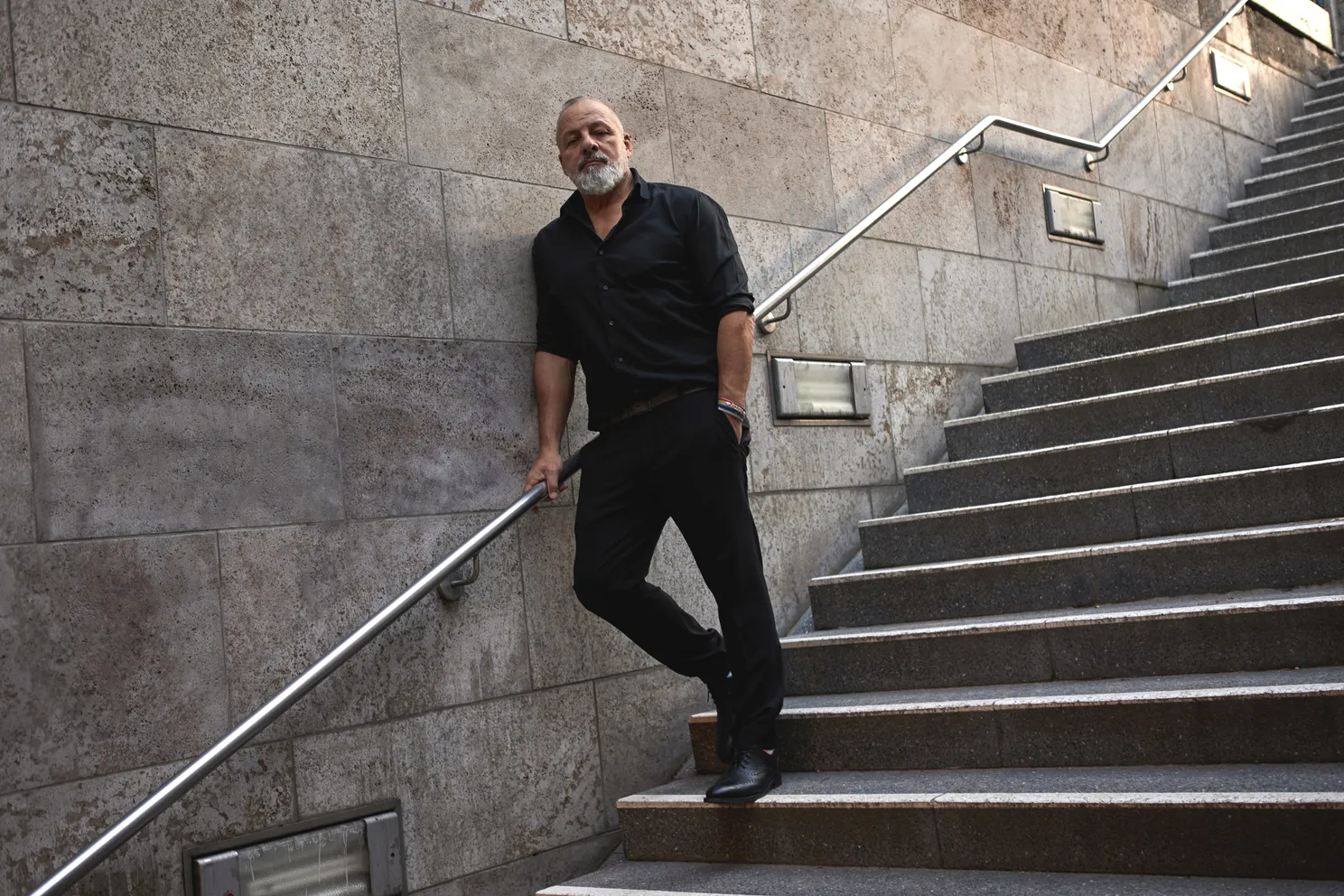
Throughout the day, Luke Niederer, a passionate history buff and Berlin expert, will guide you through both the optimism of the Golden Twenties and the tragedy that followed.
Meeting Point: Pavlova Café
Your experience begins over tea or coffee at Pavlova Café on Kurfürstendamm, where Luke will welcome you and set the scene.
Imagine Berlin in 1925. Germany is recovering from war, inflation and political instability. Yet Berlin is reinventing itself faster than any city in Europe.
Writers, performers and intellectuals from around the world are drawn here. The city is often described as dancing on the edge of a volcano - full of creativity, freedom and uncertainty.
Your first stop introduces this remarkable new urban culture.
Kurfürstendamm - Berlin's Champs-Élysées
By the 1920s, Kurfürstendamm had become Berlin's cultural heart. Artists, film stars, journalists, industrialists and political radicals mingled along the boulevard.
Its cafés served as intellectual meeting places where books were conceived, ideas exchanged and movements formed.
As Luke points out historic locations along the boulevard, you'll discover why Berlin was often compared to New York: fast, modern and ambitious. The atmosphere was electric.
KaDeWe - The Cathedral of Consumption
The famous Kaufhaus des Westens (KaDeWe) is the first major stop.
When it opened in 1907, it was already one of Europe's most ambitious department stores. By the 1920s, it had become a showcase of modern life.
Visitors came not only to shop but to experience the future: electric lighting, escalators, international fashion, exotic foods and the latest technology. For many Berliners, KaDeWe represented prosperity and cosmopolitanism after years of hardship.
Luke will also explore KaDeWe's connection to Berlin's Jewish business community, whose entrepreneurs played a major role in shaping the city's commercial and cultural life. This success story was violently interrupted after 1933.
Kaiser Wilhelm Memorial Church - A City in Transition
This landmark provides a perfect setting to explore Berlin's transformation after 1918.
The Kaiser had fled, the monarchy had collapsed and democracy had arrived. Around creative hotspots such as the Romanisches Café, new ideas about architecture, politics, sexuality and society were reshaping everyday life.
Luke reveals how the contrast between traditional monuments and modern urban culture reflected the tensions of the Weimar Republic.
From here, you'll travel west by subway to Theodor-Heuss-Platz in Charlottenburg.
Lunch at the International Club
At the Restaurant of the International Club in Berlin-Westend, you'll enjoy a two-course lunch in surroundings that reflect Berlin's postwar history.
From 1945 to 1994, the premises served as the British Officers' Club. To this day, the British monarch - now HM King Charles III - remains the club's patron.
Haus des Rundfunks - The Voice of Modern Berlin
The next stop is one of the masterpieces of twentieth-century architecture.
Designed by Hans Poelzig and completed in 1931, Haus des Rundfunks was among the world's first purpose-built broadcasting centres. It symbolized a new era in which millions could hear the same voices, music and news simultaneously.
Berlin was not merely consuming modernity; it was inventing it.
Yet there is poignancy here. By the time the building opened, the Golden Twenties were already drawing to a close. Economic crisis had returned, political extremism was rising, and within a few years the world explored during this tour would disappear.
Charlottenburg's Residential Streets
Leaving the boulevard behind, the route continues through streets such as Fasanenstraße and Mommsenstraße, entering one of Berlin's most desirable residential districts.
Writers, publishers, doctors and artists lived here. Russian émigrés settled in the area after the Revolution, while figures such as Vladimir Nabokov spent important years in Berlin.
This was also one of the centres of Jewish Berlin. By 1930, Jewish residents played a prominent role in commerce, medicine, publishing, architecture and cultural life.
Walking through these elegant streets today offers a chance to reflect on how many of these lives were uprooted after the Nazi takeover.
Lehniner Platz and the Schaubühne
If one building captures the spirit of the 1920s, it is the former Universum Cinema, designed by Erich Mendelsohn and completed in 1928.
Its sweeping lines and rounded corners embody the modernist belief that architecture should express speed, technology and progress. Unlike the heavy historic styles of the nineteenth century, this building celebrates modernity itself.
Standing here, you'll encounter one of the finest surviving examples of Weimar architecture.
The Expanding New West
As the tour continues westward, the city becomes quieter and more residential. Yet these districts represented success and modernity in the 1920s.
Luke explains how the New West expanded rapidly, with modern apartment buildings, evolving urban planning and new ideas about light, health and functionality.
Berlin was becoming a model of the twentieth-century metropolis.
Queer Berlin and the Weimar Spirit
Before the tour concludes, Luke explores one of the reasons Berlin became legendary.
The city developed one of the world's most visible queer cultures, with gay and lesbian bars, publications, political organizations and drag performances. Magnus Hirschfeld's Institute for Sexual Science conducted pioneering research into sexuality and gender identity.
Visitors from Britain, France and America were astonished by the freedom they encountered. Christopher Isherwood later described Berlin as a place where people could reinvent themselves.
This brief period of openness made Berlin internationally famous. It also reminds us that the Golden Twenties were not only about architecture, technology and prosperity, but about personal freedom and self-expression.
Like so much else explored during the day, that world would soon be destroyed by the Nazi regime.
Snapshot
Over the course of this journey, you'll explore a district that embodied the hopes of the Weimar Republic.
Luke will take you through modern architecture, Berlin's transformation after the First World War, the flourishing of Jewish cultural life, the remarkable freedom of queer Berlin, and the optimism inspired by technology, cinema and radio.
At the same time, the tour reveals how fragile that world proved to be.
The buildings remain, but many of the communities that gave them meaning were destroyed. That combination of brilliance and tragedy is what makes 1920s Berlin so fascinating - and why its story continues to resonate today.
Meeting point and stations
- 1
Meeting Point
Pavlova Café
Kurfürstendamm 210 D-10719 Berlin
Duration
4:30 hours
Dates and Booking
Next dates
September 2026
October 2026